Five failures, not a single success

Donald Trump never stops singing his own praises. He probably really does believe he is truly brilliant, but apart from having caused global chaos in just seven weeks, what has he actually achieved?

The answer can be summed up in one word: nothing, absolutely nothing, while his failures are as numerous as they are spectacular.

Twice already, he has announced the imposition of 25% customs duties on Canadian and Mexican imports and twice he has immediately backed down, postponing these decisions to calm the stock markets that were beginning to spiral downwards all over the world.

Investors and industrialists are clearly not convinced by the benefits of these customs barriers, which Donald Trump himself says, and believes, will reindustrialise the United States by bringing jobs and wealth to the country. They have made this known, and since this president and his friends hate to see their wallets go thin, the United States will be waiting for their miracle cure.

Not exactly glorious and even less honourable, but what can we say about Gaza? As a visionary, Donald Trump had come up with a plan for this coastal strip that had become a pile of ruins still largely controlled by Hamas. A very simple plan: after emptying it of its two million inhabitants, it was going to be turned into a Trump Riviera dotted with hotels and casinos and now controlled by the United States.

No one had thought of this before. Well done, remarkable, but neither Egypt nor Jordan want these two million Gazans who would have had to be evacuated with their feet chained, and this plan, which constitutes a crime against humanity, is… How can I put it?

It is a shipwreck, as is the credibility of this man, who has already had to disown his right-hand man, that other genius Elon Musk, who had antagonised the ministers by reducing their numbers without asking their opinion. They came to no other place but the Oval Office to protest, which they did so vehemently that Donald Trump has now decided that layoffs should be performed with a scalpel rather than a chainsaw.

Well done, Mr President, we could not have put it better ourselves, but what is the state of Europe, this European Union that you have just said was created only to ‘screw the United States’ and that you obviously want to dismantle?

Well, it has exceeded all your expectations since it has unanimously, including Hungary, decided to adopt a common defence policy to ensure its ‘autonomy’, Great Britain has rallied to this ambition, London, Paris and Berlin are now united in a common desire to do without you and the Europeans have never been as united as they are today.

There, your success is frankly dazzling, but there is still Ukraine. You have shown the whole world how you could treat, in the person of its president, a people who have been fighting for three years to face up to a colonial aggression. Compared to Volodymyr Zelinsky, you and your vice-president were nothing more than gang leaders of appalling vulgarity, but now?

You have deprived Ukraine of weapons and intelligence. You have closed the doors of the Atlantic Alliance to it. You have stabbed it in the back but how are you going to demilitarise it, a condition set by Vladimir Putin for the signing of an agreement?

You will not be able to. You will not be able to prevent the Europeans from helping and arming Ukraine, and it is therefore far from certain that you will reach a deal with your friend in the Kremlin or that this deal will last for long.

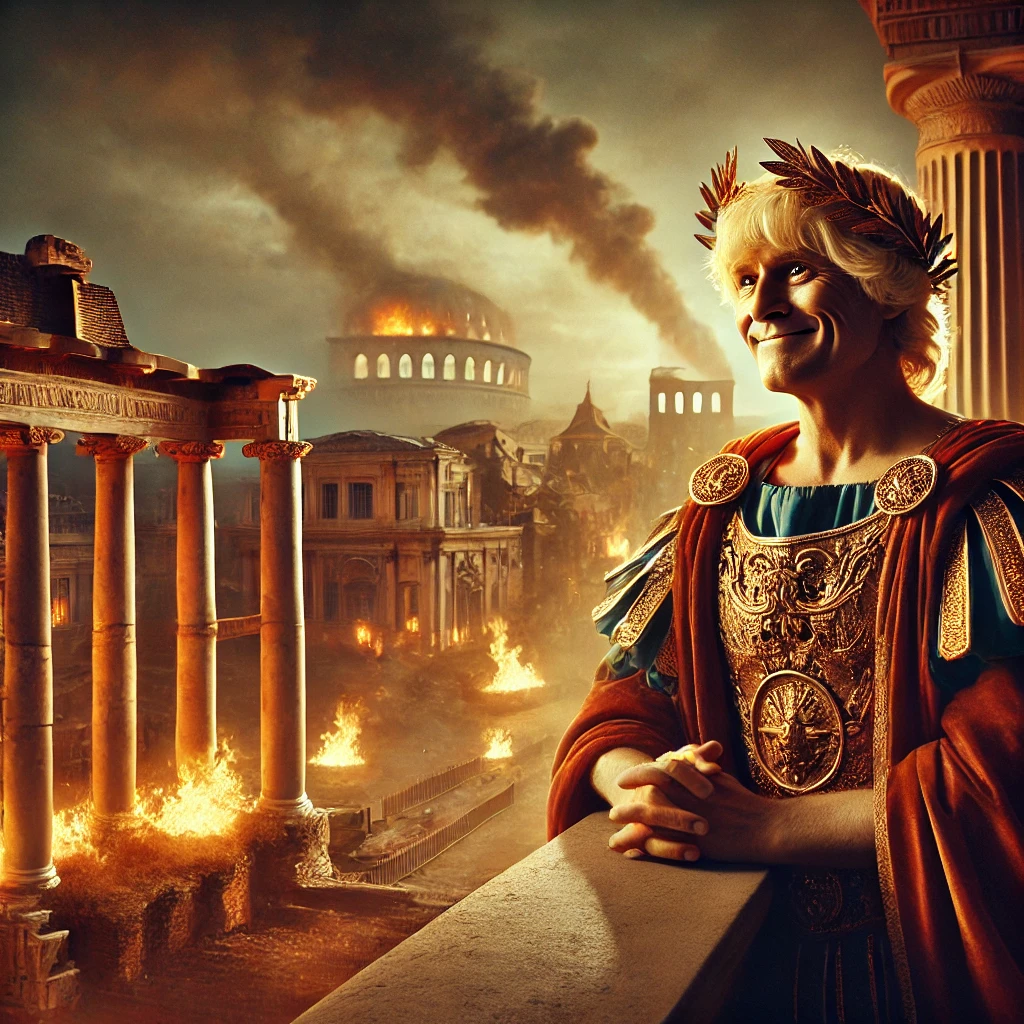
You have caused so much damage and accumulated so many failures in seven weeks that you have already earned your nickname: Nero, the grotesque and devastating emperor who also thought he was a genius.

(Photo: ChatGPT)
The Union is more likely to get stronger than to fall apart

Will we be up to the challenge? It is far from impossible. It is even far from unlikely, but those who say in such large numbers that we will not be able to cope with Donald Trump and that Europe will soon crumble under his blows are unfortunately not short of arguments.

First, these pessimists are right when they say that the European Union has never had so few leaders capable of keeping it afloat. It is not that there is a lack of intelligence, but never before have the two leading European powers, Germany and France, experienced such simultaneous internal, economic and political crises. These simultaneous paralyses have left the Union without a pilot, while in Washington one appointment follows another, each more appalling than the last.

Secondly, the extreme right has never been able to offer the European right, the People’s Party, an alternative majority to the one it forms with the centrists and the social democrats. On several occasions in recent weeks, the right has been able to rely on the far right to push through policies or appointments that its allies on the left and centre did not want. Mistrust and tensions are growing between the forces that make up the majority that is supposed to run the Union and to which Ursula von der Leyen owes her reappointment as head of the Commission.

Third, Europe’s finances have never been in such a sorry state, with the German economy in structural collapse and French and Italian debt at record levels. As a result, none of the Union’s largest countries has the resources to make the massive civil and military investments that Europe urgently needs if it is not to lose out to China and the United States.

Fourth, never before have the political scenes in the 27 member states of the European Union seemed so uncertain, with the right and the left all experiencing an identity crisis, the Europhobic or Eurosceptic far right on the rise almost everywhere, and it becoming increasingly difficult to form coherent and stable governing coalitions.

Finally, the countries in Europe have never been so insecure in the last eight decades, facing a war of aggression in the east, growing chaos in the south and a US withdrawal in the west that leaves them virtually defenceless.

The pessimism is not unfounded, but rather than the end of the Union, we might be witnessing its political reassertion.

Ever since Donald Trump’s first term in office, the European states have been so well aware that American defensive umbrella was closing that the taboo that had hitherto hung over the idea of a common defence had fallen. The entry of Russian troops into Ukraine accelerated this development to such an extent that the next Commission will include a Commissioner for Defence, whose main task will be to lay the foundations for the pan-European military industries without which there can be no autonomous defence for the Union.

But these are not just words. Not only are the countries that emerged from the Soviet bloc now in the vanguard of the fight for a common defence, but questions are now being raised in Brussels about the possibility of diverting large unused civilian funds to defence and of seeing the French deterrent replace the American umbrella.

There is so much fear that Donald Trump will start a trade war with the EU and make deals with Vladimir Putin at the expense of Ukrainians and Europeans as a whole that a rapprochement between Britain and the EU is being sought; Poland is calling for Europe to close ranks to counter the American retreat and, weakening France or not, it is French views on the imperative of common defence and strategic autonomy that now dominate the EU.

Thirdly, Germany’s need for investment is so great that its right-wing appears ready to break with the prohibitions on the Federal Republic’s indebtedness. After early parliamentary elections next February, Europe’s largest economy is likely to be led by a Christian Democrat, Friedrich Merz, who wants Berlin to borrow, invest and use German long-range weapons to compensate for the likely reduction in US support for Ukraine.

If Germany is open to the idea of borrowing, it is reasonable to think that it might also be open to European loans that would promote a common industrial policy and allow investment in European defence and the development of joint military assistance to Ukraine.

The areas in which the Franco-German training force could be reconstituted and extended to Poland have already been largely outlined. In the European Council, Parliament and Commission, the ranks of the left, the right, the Greens and the centre will be drawn closer together, to the detriment of the far right. Trump’s scarecrow will strengthen the Union rather than destroy it, because in politics necessity rules.

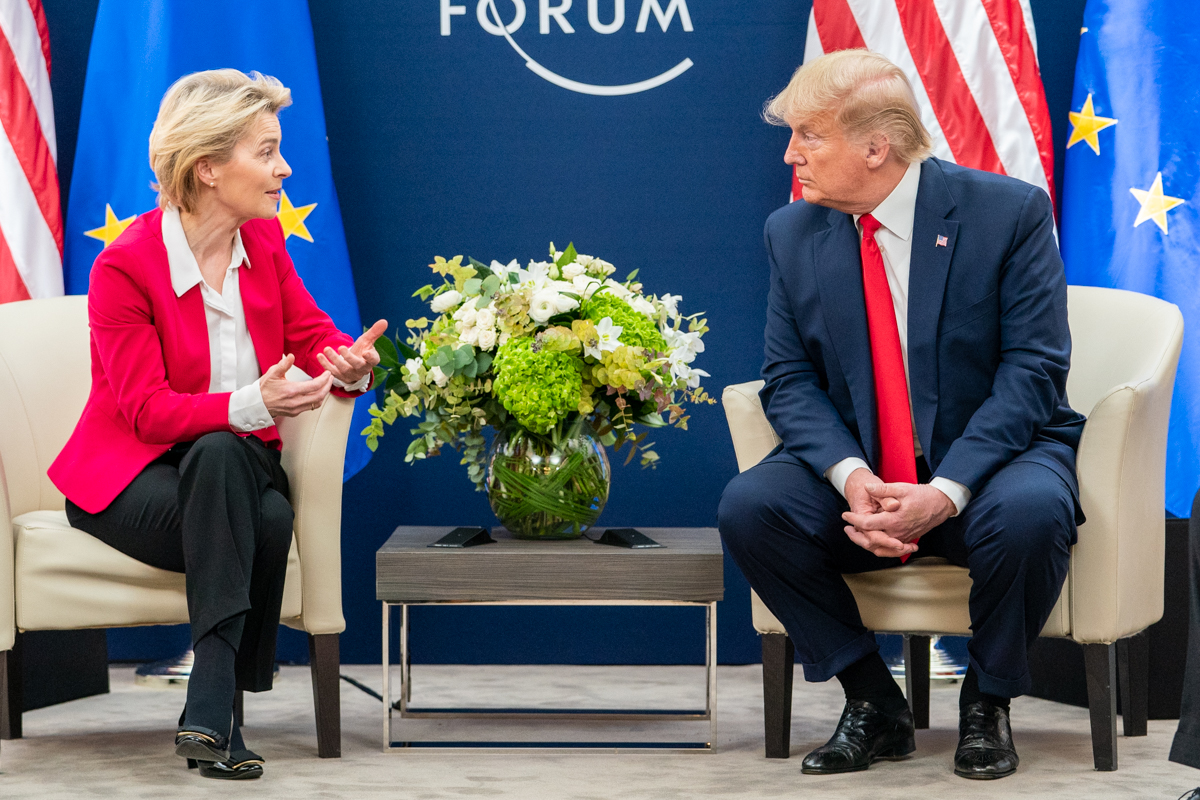
(Photo: Trump White House Archived)