Five failures, not a single success

Donald Trump never stops singing his own praises. He probably really does believe he is truly brilliant, but apart from having caused global chaos in just seven weeks, what has he actually achieved?

The answer can be summed up in one word: nothing, absolutely nothing, while his failures are as numerous as they are spectacular.

Twice already, he has announced the imposition of 25% customs duties on Canadian and Mexican imports and twice he has immediately backed down, postponing these decisions to calm the stock markets that were beginning to spiral downwards all over the world.

Investors and industrialists are clearly not convinced by the benefits of these customs barriers, which Donald Trump himself says, and believes, will reindustrialise the United States by bringing jobs and wealth to the country. They have made this known, and since this president and his friends hate to see their wallets go thin, the United States will be waiting for their miracle cure.

Not exactly glorious and even less honourable, but what can we say about Gaza? As a visionary, Donald Trump had come up with a plan for this coastal strip that had become a pile of ruins still largely controlled by Hamas. A very simple plan: after emptying it of its two million inhabitants, it was going to be turned into a Trump Riviera dotted with hotels and casinos and now controlled by the United States.

No one had thought of this before. Well done, remarkable, but neither Egypt nor Jordan want these two million Gazans who would have had to be evacuated with their feet chained, and this plan, which constitutes a crime against humanity, is… How can I put it?

It is a shipwreck, as is the credibility of this man, who has already had to disown his right-hand man, that other genius Elon Musk, who had antagonised the ministers by reducing their numbers without asking their opinion. They came to no other place but the Oval Office to protest, which they did so vehemently that Donald Trump has now decided that layoffs should be performed with a scalpel rather than a chainsaw.

Well done, Mr President, we could not have put it better ourselves, but what is the state of Europe, this European Union that you have just said was created only to ‘screw the United States’ and that you obviously want to dismantle?

Well, it has exceeded all your expectations since it has unanimously, including Hungary, decided to adopt a common defence policy to ensure its ‘autonomy’, Great Britain has rallied to this ambition, London, Paris and Berlin are now united in a common desire to do without you and the Europeans have never been as united as they are today.

There, your success is frankly dazzling, but there is still Ukraine. You have shown the whole world how you could treat, in the person of its president, a people who have been fighting for three years to face up to a colonial aggression. Compared to Volodymyr Zelinsky, you and your vice-president were nothing more than gang leaders of appalling vulgarity, but now?

You have deprived Ukraine of weapons and intelligence. You have closed the doors of the Atlantic Alliance to it. You have stabbed it in the back but how are you going to demilitarise it, a condition set by Vladimir Putin for the signing of an agreement?

You will not be able to. You will not be able to prevent the Europeans from helping and arming Ukraine, and it is therefore far from certain that you will reach a deal with your friend in the Kremlin or that this deal will last for long.

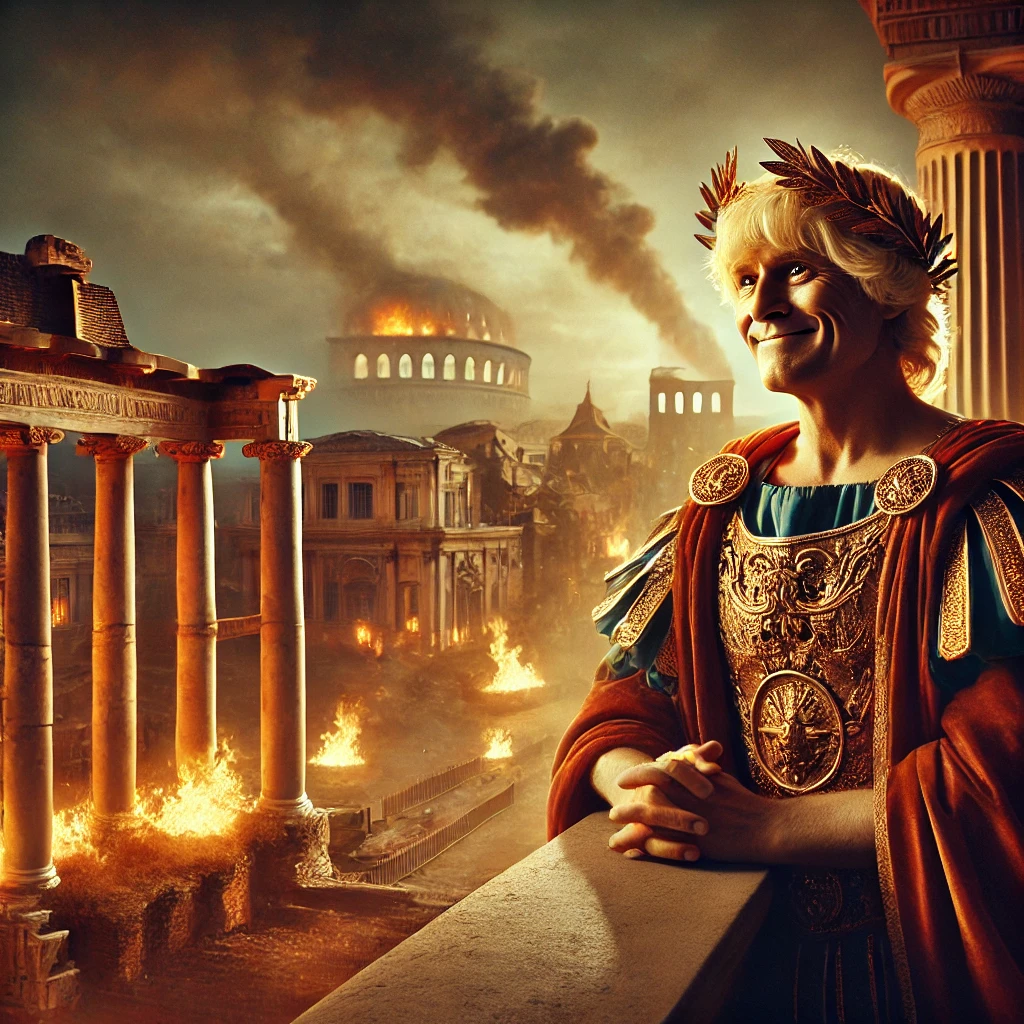
You have caused so much damage and accumulated so many failures in seven weeks that you have already earned your nickname: Nero, the grotesque and devastating emperor who also thought he was a genius.

(Photo: ChatGPT)
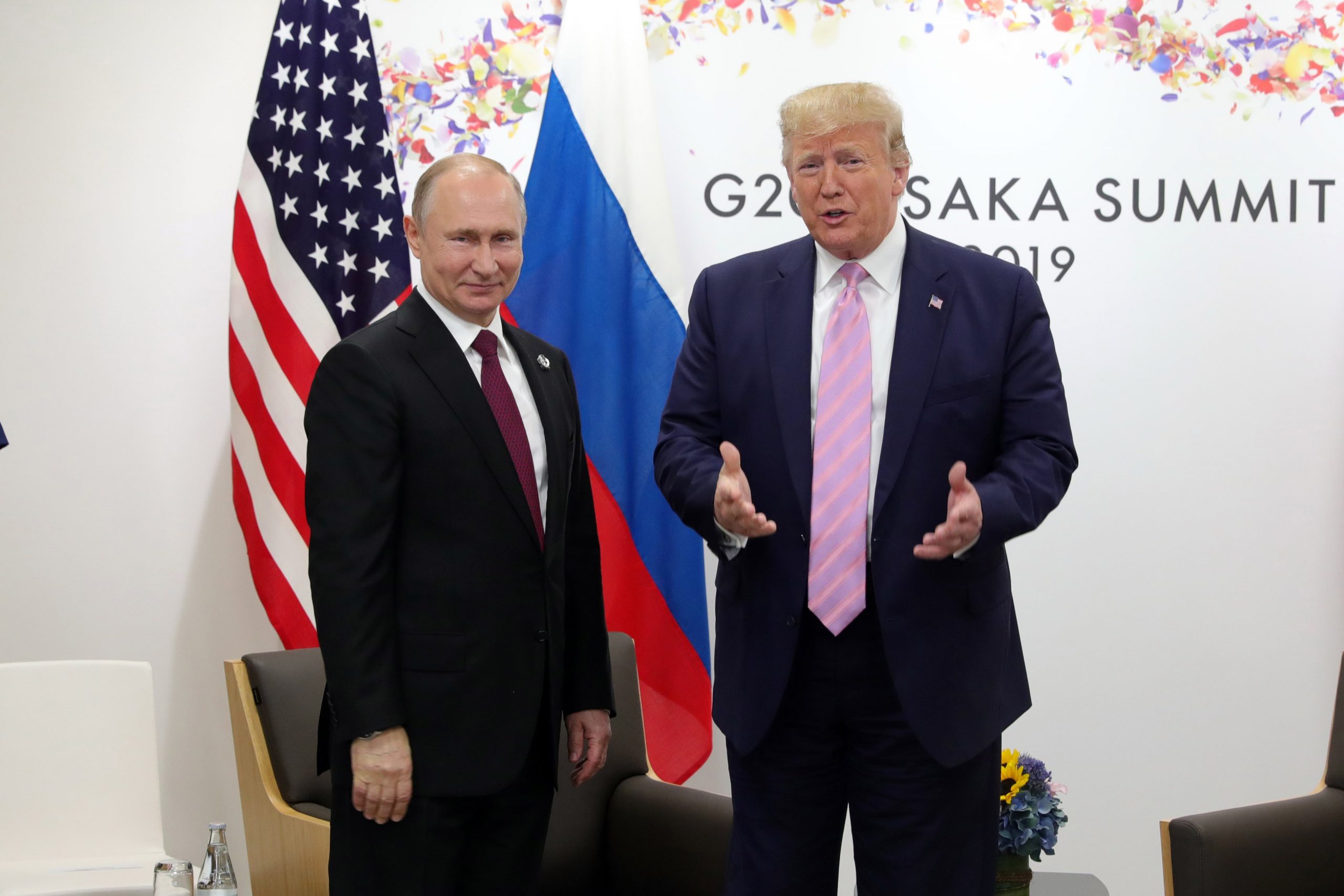
Donald Putin and Vladimir Trump

America is a democracy. That is why Donald Trump is not Vladimir Putin, because unlike the Russian president, he will eventually come up against checks and balances in the judiciary, Congress, the press, the governors and the Federal Reserve.

There are limits to Donald Trump’s power that do not hinder Vladimir Putin’s, but the political similarities between these two men today are staggering.

Both know only too well how a lie hammered into the heads becomes a debated truth, so that it is no longer clear which is the bigger liar of the two, the one who claims that “Nazis” are governing Ukraine or the one who insists that Joe Biden “stole” his re-election in November 2000.

Both hate freedom of the press, and while Vladimir Putin has put an end to it, Donald Trump is determined to weaken it by denouncing it as the primary weapon of the occult power that supposedly dominates America.

Both see the judiciary as nothing more than an instrument of the executive, which Putin has turned into a machine for locking up his opponents, and which Trump has set out to control by making sure he has the support of the Supreme Court.

Both govern by confusing the powers of money and the state in a system of oligarchy that post-communist Russia reinvented thirty years before Donald Trump imported it to the United States.

Both want to bury the concertation of nations and international law by subordinating them to the interests of the great powers and their desire for territorial expansion in Greenland and Ukraine.

Finally, both of them are securing popular support by defending morality, religion, the division of roles between the male hunter and the housewife, and all the national, cultural and religious traditions of the past, whose decline is disturbing a large part of societies on all five continents.

Behind this conservative mask, what Donald Trump and Vladimir Putin embody is a return to the law of the jungle based on a rejection of the state as a referee, of the law whch they rename ‘regulation’, of the redistribution of income and of the desire to moralise international relations. As with Mr Xi, Mr Modi, Mr Orban and so many others, with them we return to the omnipotence of money and the brutality of social and international relations that dominated the world until the end of the First World War and the defeat of Nazism.

This “reactionary international”, to use Emmanuel Macron’s words, draws its strength from the intellectual exhaustion of the major parties that had rebuilt the post-war world. Because it fills a vacuum, it will not weaken any time soon, and that is why it must be fought by rallying the coalition of democrats everywhere against the coalition of the oligarchy, the power of a few rich and powerful.

As during the war, but probably for much longer, we need to unite all democrats, right and left, against those who would like to see an end to democracy and are no longer afraid to say so. This must be done without delay in Europe to ensure that the European Union, a bastion of the rule of law, does not fall into the hands of the admirers of Donald Putin and Vladimir Trump.

(Photo: Kremlin.ru via Wikimedia Commons 2019)

The Union is more likely to get stronger than to fall apart

Will we be up to the challenge? It is far from impossible. It is even far from unlikely, but those who say in such large numbers that we will not be able to cope with Donald Trump and that Europe will soon crumble under his blows are unfortunately not short of arguments.

First, these pessimists are right when they say that the European Union has never had so few leaders capable of keeping it afloat. It is not that there is a lack of intelligence, but never before have the two leading European powers, Germany and France, experienced such simultaneous internal, economic and political crises. These simultaneous paralyses have left the Union without a pilot, while in Washington one appointment follows another, each more appalling than the last.

Secondly, the extreme right has never been able to offer the European right, the People’s Party, an alternative majority to the one it forms with the centrists and the social democrats. On several occasions in recent weeks, the right has been able to rely on the far right to push through policies or appointments that its allies on the left and centre did not want. Mistrust and tensions are growing between the forces that make up the majority that is supposed to run the Union and to which Ursula von der Leyen owes her reappointment as head of the Commission.

Third, Europe’s finances have never been in such a sorry state, with the German economy in structural collapse and French and Italian debt at record levels. As a result, none of the Union’s largest countries has the resources to make the massive civil and military investments that Europe urgently needs if it is not to lose out to China and the United States.

Fourth, never before have the political scenes in the 27 member states of the European Union seemed so uncertain, with the right and the left all experiencing an identity crisis, the Europhobic or Eurosceptic far right on the rise almost everywhere, and it becoming increasingly difficult to form coherent and stable governing coalitions.

Finally, the countries in Europe have never been so insecure in the last eight decades, facing a war of aggression in the east, growing chaos in the south and a US withdrawal in the west that leaves them virtually defenceless.

The pessimism is not unfounded, but rather than the end of the Union, we might be witnessing its political reassertion.

Ever since Donald Trump’s first term in office, the European states have been so well aware that American defensive umbrella was closing that the taboo that had hitherto hung over the idea of a common defence had fallen. The entry of Russian troops into Ukraine accelerated this development to such an extent that the next Commission will include a Commissioner for Defence, whose main task will be to lay the foundations for the pan-European military industries without which there can be no autonomous defence for the Union.

But these are not just words. Not only are the countries that emerged from the Soviet bloc now in the vanguard of the fight for a common defence, but questions are now being raised in Brussels about the possibility of diverting large unused civilian funds to defence and of seeing the French deterrent replace the American umbrella.

There is so much fear that Donald Trump will start a trade war with the EU and make deals with Vladimir Putin at the expense of Ukrainians and Europeans as a whole that a rapprochement between Britain and the EU is being sought; Poland is calling for Europe to close ranks to counter the American retreat and, weakening France or not, it is French views on the imperative of common defence and strategic autonomy that now dominate the EU.

Thirdly, Germany’s need for investment is so great that its right-wing appears ready to break with the prohibitions on the Federal Republic’s indebtedness. After early parliamentary elections next February, Europe’s largest economy is likely to be led by a Christian Democrat, Friedrich Merz, who wants Berlin to borrow, invest and use German long-range weapons to compensate for the likely reduction in US support for Ukraine.

If Germany is open to the idea of borrowing, it is reasonable to think that it might also be open to European loans that would promote a common industrial policy and allow investment in European defence and the development of joint military assistance to Ukraine.

The areas in which the Franco-German training force could be reconstituted and extended to Poland have already been largely outlined. In the European Council, Parliament and Commission, the ranks of the left, the right, the Greens and the centre will be drawn closer together, to the detriment of the far right. Trump’s scarecrow will strengthen the Union rather than destroy it, because in politics necessity rules.

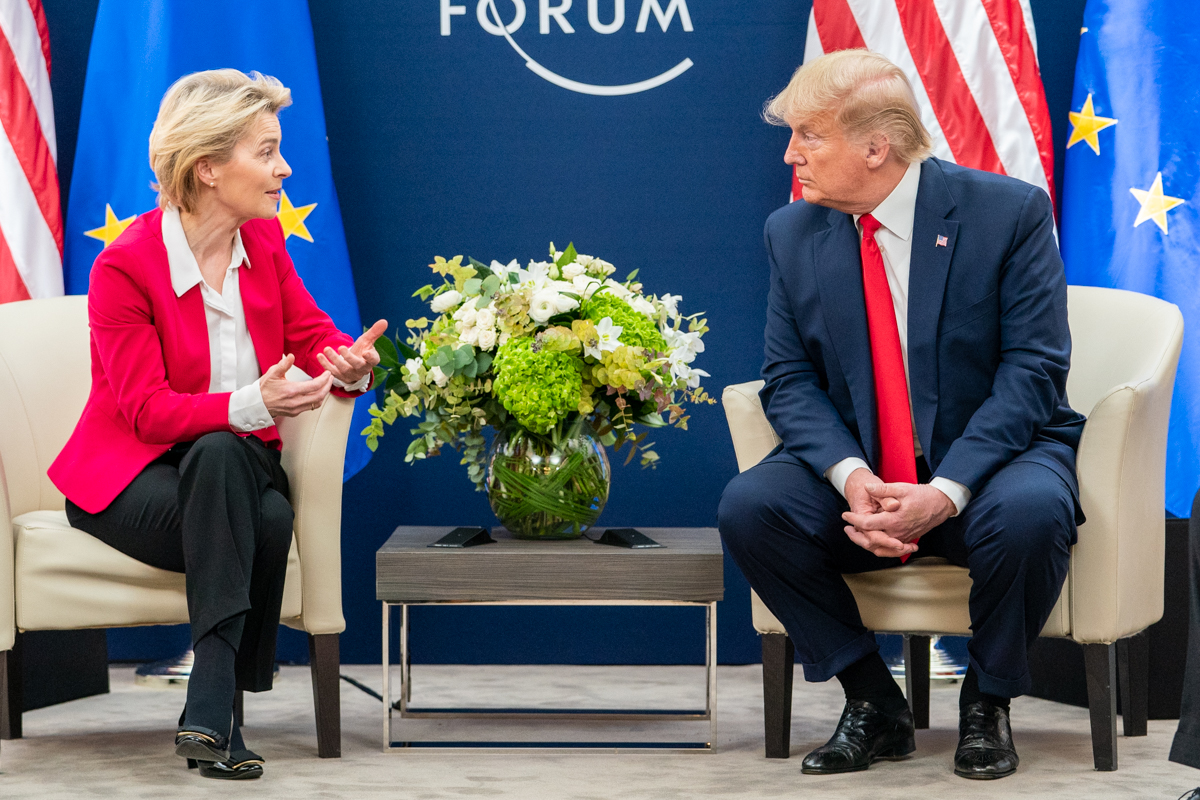
(Photo: Trump White House Archived)

America’s lost “golden age”

The reasons for this are not specifically American, as there are many other Trumps around the world. Nor does it have anything to do with Joe Biden’s belated withdrawal, since Donald Trump had already won over half the American people months earlier.

So why?

How can we understand that the United States gave such a solid majority to an incredible liar, a rude megalomaniac who can go so far as to imitate a fellatio with his lips while holding a microphone in his hands in front of a crowd of cheering admirers? How can we accept that the fate of Ukraine, its people and its heroes now depends on a man who admires Vladimir Putin as much as he hates Europeans?

The answer can be summed up in one word: fear.

This fear, which has gripped all five continents since the beginning of the century, is felt more acutely by Americans than by the rest of the world because they have grown accustomed to being the richest, the strongest, the most industrialised and the best armed. Protected by two oceans from the chaos outside, they had never been attacked in their heartland, but they discovered their insecurity on 11 September 2001, when terrorism brought the war to Manhattan.

“Why do they hate us?” asked a major American magazine, but in 2017 – an eye for an eye, a tooth for a tooth – Trump suspended visas for citizens of many Muslim countries.

Then the evidence of global warming became compelling, and the United States was particularly frightened by it, because it had to admit that its continent-sized country was threatened by all kinds of natural disasters, and that its economy and way of life were too, given its dependence on oil. It was in the United States that global warming most clearly signalled the end of an era, and what did Donald Trump say to his fellow citizens? “Don’t worry,” he told them, because it is all a hoax and I’m pulling us out of international climate agreements.

And then there was China, a dormant power whose awakening is shaking the world. China is de-industrialising the whole world, but it is a real challenge for the United States, because it could well relegate it to second place, and what did Donald Trump say to the Americans? “Don’t panic”, he told them: we are going to build customs walls.

And then there is immigration, the scale of which is provoking rejection everywhere. It is all the stronger in the United States because its border with the “subcontinent” is not a sea border but a territorial continuum, and what did Donald Trump say to the American voters? “We are closing the doors”, he told them, building a wall and promising mass deportations.

And then, in recent years, there has been an increase in the number of wars, which has raised fears everywhere of a third world war. The Americans are the ones who fear it the most, because they no longer want to get involved in distant conflicts, and what did Donald Trump say to them? “We are withdrawing to the safety of our borders”, he told them, when the House of Representatives was blocking all aid to Ukraine for six months.

With the balance of terror no longer there to ensure international order, with the climate itself going haywire and with the traditional political forces having no convincing answer to the challenges of this new century, there is not a people on this earth that is not afraid, but Americans are the most frightened of them all because they have the most to lose.

So there is nothing mysterious about the fact that protectionism is making a comeback, that the nationalist far right is on the rise everywhere, that the quest for “prophets” takes precedence over reason, and that a majority of Americans voted for the leader who promised them a return to their “golden age” – the time when they felt certain of their safety and forever the strongest.

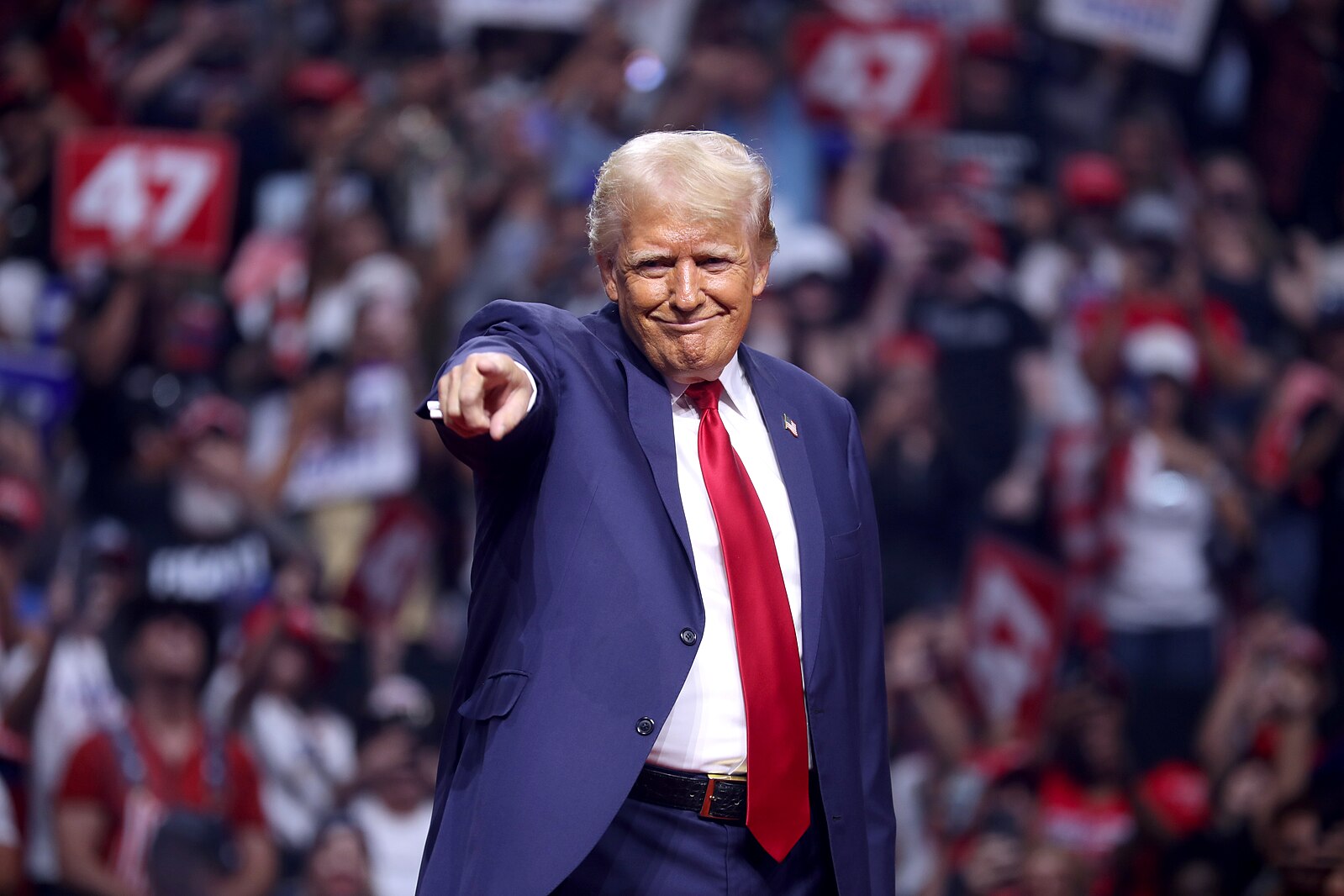
(Photo: Donald Trump speaking with attendees at a rally at Desert Diamond Arena in Glendale, Arizona on 23 August 2024. © Wikimedia Commons. Photographer: Gage Skidmore.)

Europe after the 5th of November

In the first scenario, everything is tragically clear. If Donald Trump is elected on 5 November, he will not wait even until he takes office to seal with Vladimir Putin a division of Ukraine, based on the model of the two Germanies or the two Koreas.

De facto, if not de jure, the territories occupied by Russian troops would go to the Kremlin, which in return would undertake not to try to advance beyond this demarcation line. This would be Ukraine’s defeat Vladimir Putin’s victory, but a debate would open up immediately, a debate both fundamental and furious.

Should the amputated Ukraine join NATO or not?

Assuming that the agreement reached between the Russian President and his friend Donald did shut the NATO’s door in its face, Ukraine would be more eager than ever to join. The Europeans, for their part, would have a vital interest in seeing Ukraine become the thirty-third member of the Atlantic Alliance, thus benefiting from a level of protection that they cannot provide today on their own. For both Ukraine and the European Union, this enlargement of NATO would be the only real way of preventing Vladimir Putin from rebuilding the Russian empire by soon setting off again for Kiev. In short, Europeans should prepare to fight this battle without waiting for the results on 5 November, but they should be aware of two things.

One is that Donald Trump would not be easily persuaded to accept Ukraine’s accession to a NATO he no longer sees any use for. The other is that the task of the Europeans may not be as limited as trying to tighten the Western ranks under the American umbrella. Knowing that the United States is turning its focus to the Chinese challenge and this President is determined to hasten this process, he may be tempted to altogether turn his back on the Atlantic Alliance.

Under a new Trump presidency, the Europeans would have to learn to exist on their own, to speed up considerably the creation of their common defence and to define new modes and degrees of integration with their Union. They need to this so that they could open their doors to Ukraine and form a common front with it as quickly as possible. The aim would be twofold: to send a message to Russia that if it attacked Ukraine again it would be attacking the whole Union; and to rely on the Ukrainian defence system to shorten the time needed for building a common European defence. In the Trump scenario, the objective of the Europeans should be, to immediately integrate Ukraine into the European Union and possibly into the Atlantic Alliance, but in the Harris scenario?

In this second hypothesis, everything would be both more reassuring and more complicated.

There would be no need to fear that the new American administration would come to an agreement with the Kremlin at the expense of Ukraine and of Europe. Nor would it be conceivable that the United States would suddenly set out to discredit the Atlantic Alliance or would want to leave it overnight. With Kamala Harris, the European Union would not be faced with the challenge of having to reinvent itself in a matter of months, but would the differences between a Harris presidency and a Trump presidency be, in substance, as decisive as they appear?

Unlike Donald Trump, Kamala Harris certainly has no admiration for Vladimir Putin. Unlike him, she does not see the European Union as a rival that America should undo, but she is Californian and was still very young when the Berlin Wall fell. For her, as for Trump, it is not to Europe but to Asia that the United States must turn its gaze, and everything indicates that she would quickly like to bring the Ukrainians to a compromise with Russia that could be very similar to the one envisaged by her Republican opponent.

However, if it is done politely enough so that Europe does not seem betrayed, several European capitals will approve of this approach. On the right, on the left and in the centre, a large part of the public opinion in the 27 member states would also applaud it. In the relief that this illusion of “détente” would bring, it would be difficult to plead for Ukraine’s entry into the Atlantic Alliance or into the European Union

Just as the election of Trump could force the European Union to assume its political responsibilities, the election of Kamala Harris would lead the 27 into deep divergences and a new and dangerous phase of procrastination.

Rather than Ukraine joining the NATO, the Europeans would have to work to ensure that it obtained Western security guarantees. This would be less difficult for them, and rather than immediately trying to enlarge the Union with what would have become “Western Ukraine”, they would have to increase the number of civil and military cooperation agreements with it in order to strengthen their border with Russia and pave the way for future integration.

Harris or Trump, the 5 of November will put the European Union to the test.

(Photo by Andrii Smuryhin)