America’s lost “golden age”

The reasons for this are not specifically American, as there are many other Trumps around the world. Nor does it have anything to do with Joe Biden’s belated withdrawal, since Donald Trump had already won over half the American people months earlier.

So why?

How can we understand that the United States gave such a solid majority to an incredible liar, a rude megalomaniac who can go so far as to imitate a fellatio with his lips while holding a microphone in his hands in front of a crowd of cheering admirers? How can we accept that the fate of Ukraine, its people and its heroes now depends on a man who admires Vladimir Putin as much as he hates Europeans?

The answer can be summed up in one word: fear.

This fear, which has gripped all five continents since the beginning of the century, is felt more acutely by Americans than by the rest of the world because they have grown accustomed to being the richest, the strongest, the most industrialised and the best armed. Protected by two oceans from the chaos outside, they had never been attacked in their heartland, but they discovered their insecurity on 11 September 2001, when terrorism brought the war to Manhattan.

“Why do they hate us?” asked a major American magazine, but in 2017 – an eye for an eye, a tooth for a tooth – Trump suspended visas for citizens of many Muslim countries.

Then the evidence of global warming became compelling, and the United States was particularly frightened by it, because it had to admit that its continent-sized country was threatened by all kinds of natural disasters, and that its economy and way of life were too, given its dependence on oil. It was in the United States that global warming most clearly signalled the end of an era, and what did Donald Trump say to his fellow citizens? “Don’t worry,” he told them, because it is all a hoax and I’m pulling us out of international climate agreements.

And then there was China, a dormant power whose awakening is shaking the world. China is de-industrialising the whole world, but it is a real challenge for the United States, because it could well relegate it to second place, and what did Donald Trump say to the Americans? “Don’t panic”, he told them: we are going to build customs walls.

And then there is immigration, the scale of which is provoking rejection everywhere. It is all the stronger in the United States because its border with the “subcontinent” is not a sea border but a territorial continuum, and what did Donald Trump say to the American voters? “We are closing the doors”, he told them, building a wall and promising mass deportations.

And then, in recent years, there has been an increase in the number of wars, which has raised fears everywhere of a third world war. The Americans are the ones who fear it the most, because they no longer want to get involved in distant conflicts, and what did Donald Trump say to them? “We are withdrawing to the safety of our borders”, he told them, when the House of Representatives was blocking all aid to Ukraine for six months.

With the balance of terror no longer there to ensure international order, with the climate itself going haywire and with the traditional political forces having no convincing answer to the challenges of this new century, there is not a people on this earth that is not afraid, but Americans are the most frightened of them all because they have the most to lose.

So there is nothing mysterious about the fact that protectionism is making a comeback, that the nationalist far right is on the rise everywhere, that the quest for “prophets” takes precedence over reason, and that a majority of Americans voted for the leader who promised them a return to their “golden age” – the time when they felt certain of their safety and forever the strongest.

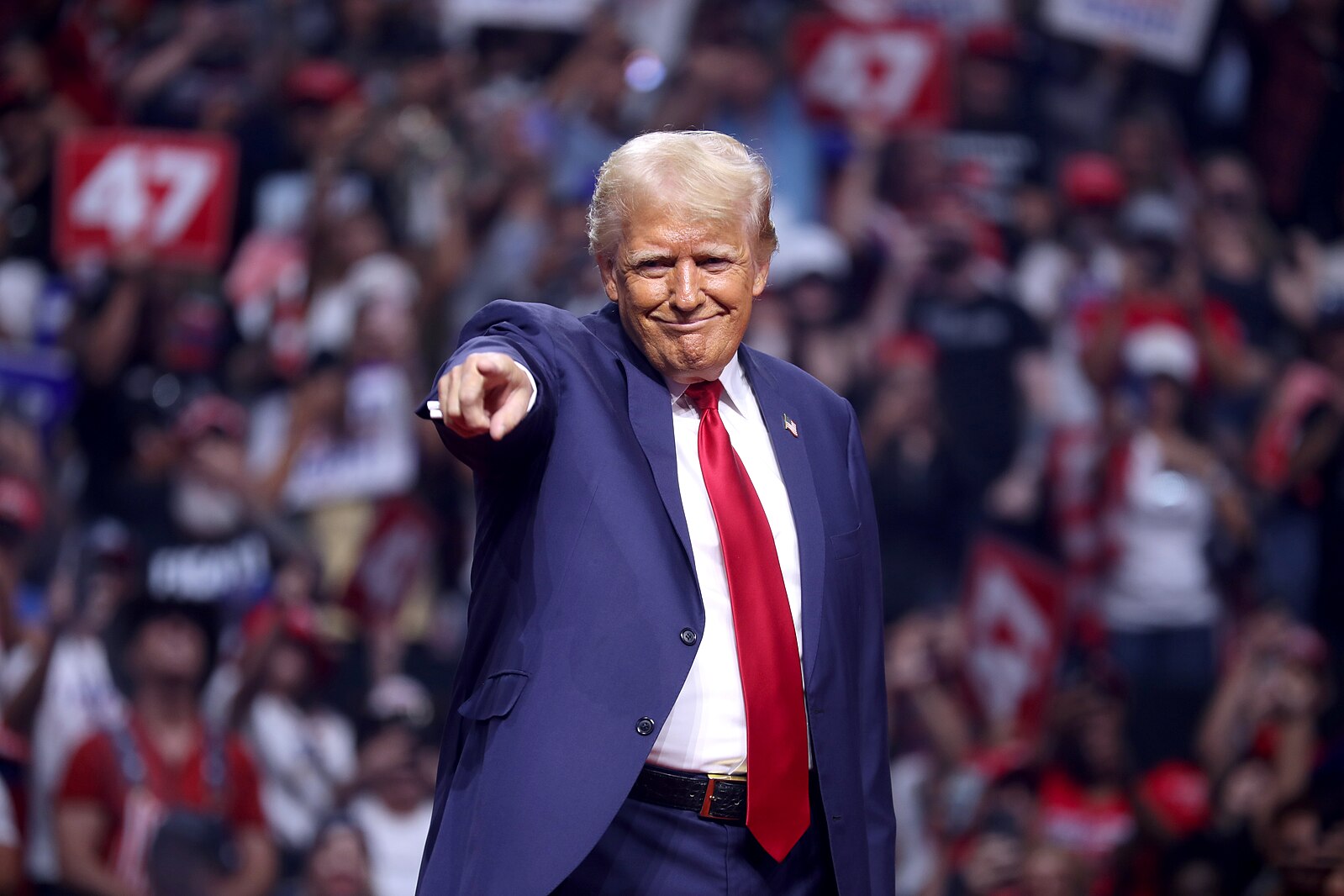
(Photo: Donald Trump speaking with attendees at a rally at Desert Diamond Arena in Glendale, Arizona on 23 August 2024. © Wikimedia Commons. Photographer: Gage Skidmore.)
Europe after the 5th of November

In the first scenario, everything is tragically clear. If Donald Trump is elected on 5 November, he will not wait even until he takes office to seal with Vladimir Putin a division of Ukraine, based on the model of the two Germanies or the two Koreas.

De facto, if not de jure, the territories occupied by Russian troops would go to the Kremlin, which in return would undertake not to try to advance beyond this demarcation line. This would be Ukraine’s defeat Vladimir Putin’s victory, but a debate would open up immediately, a debate both fundamental and furious.

Should the amputated Ukraine join NATO or not?

Assuming that the agreement reached between the Russian President and his friend Donald did shut the NATO’s door in its face, Ukraine would be more eager than ever to join. The Europeans, for their part, would have a vital interest in seeing Ukraine become the thirty-third member of the Atlantic Alliance, thus benefiting from a level of protection that they cannot provide today on their own. For both Ukraine and the European Union, this enlargement of NATO would be the only real way of preventing Vladimir Putin from rebuilding the Russian empire by soon setting off again for Kiev. In short, Europeans should prepare to fight this battle without waiting for the results on 5 November, but they should be aware of two things.

One is that Donald Trump would not be easily persuaded to accept Ukraine’s accession to a NATO he no longer sees any use for. The other is that the task of the Europeans may not be as limited as trying to tighten the Western ranks under the American umbrella. Knowing that the United States is turning its focus to the Chinese challenge and this President is determined to hasten this process, he may be tempted to altogether turn his back on the Atlantic Alliance.

Under a new Trump presidency, the Europeans would have to learn to exist on their own, to speed up considerably the creation of their common defence and to define new modes and degrees of integration with their Union. They need to this so that they could open their doors to Ukraine and form a common front with it as quickly as possible. The aim would be twofold: to send a message to Russia that if it attacked Ukraine again it would be attacking the whole Union; and to rely on the Ukrainian defence system to shorten the time needed for building a common European defence. In the Trump scenario, the objective of the Europeans should be, to immediately integrate Ukraine into the European Union and possibly into the Atlantic Alliance, but in the Harris scenario?

In this second hypothesis, everything would be both more reassuring and more complicated.

There would be no need to fear that the new American administration would come to an agreement with the Kremlin at the expense of Ukraine and of Europe. Nor would it be conceivable that the United States would suddenly set out to discredit the Atlantic Alliance or would want to leave it overnight. With Kamala Harris, the European Union would not be faced with the challenge of having to reinvent itself in a matter of months, but would the differences between a Harris presidency and a Trump presidency be, in substance, as decisive as they appear?

Unlike Donald Trump, Kamala Harris certainly has no admiration for Vladimir Putin. Unlike him, she does not see the European Union as a rival that America should undo, but she is Californian and was still very young when the Berlin Wall fell. For her, as for Trump, it is not to Europe but to Asia that the United States must turn its gaze, and everything indicates that she would quickly like to bring the Ukrainians to a compromise with Russia that could be very similar to the one envisaged by her Republican opponent.

However, if it is done politely enough so that Europe does not seem betrayed, several European capitals will approve of this approach. On the right, on the left and in the centre, a large part of the public opinion in the 27 member states would also applaud it. In the relief that this illusion of “détente” would bring, it would be difficult to plead for Ukraine’s entry into the Atlantic Alliance or into the European Union

Just as the election of Trump could force the European Union to assume its political responsibilities, the election of Kamala Harris would lead the 27 into deep divergences and a new and dangerous phase of procrastination.

Rather than Ukraine joining the NATO, the Europeans would have to work to ensure that it obtained Western security guarantees. This would be less difficult for them, and rather than immediately trying to enlarge the Union with what would have become “Western Ukraine”, they would have to increase the number of civil and military cooperation agreements with it in order to strengthen their border with Russia and pave the way for future integration.

Harris or Trump, the 5 of November will put the European Union to the test.

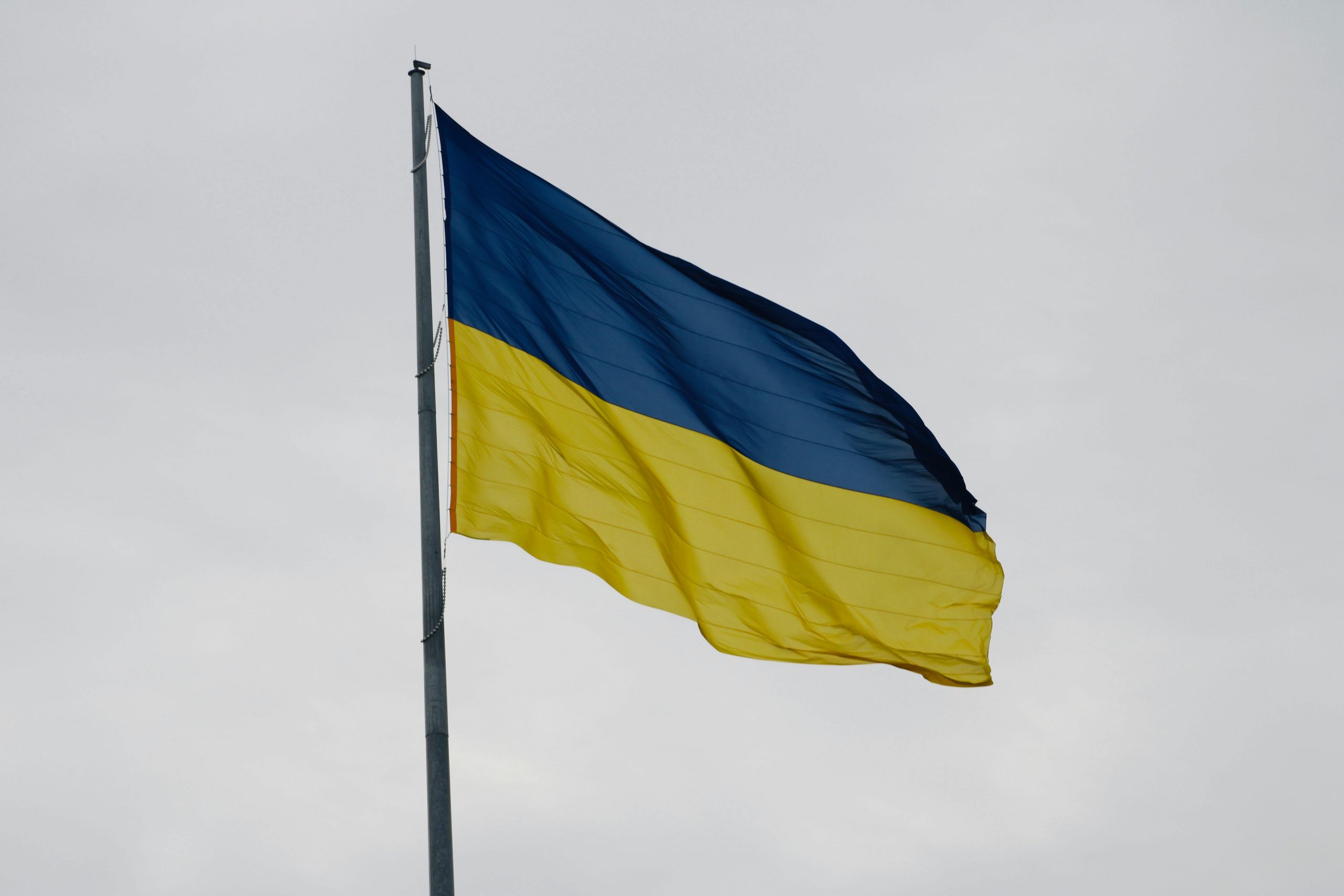
(Photo by Andrii Smuryhin)