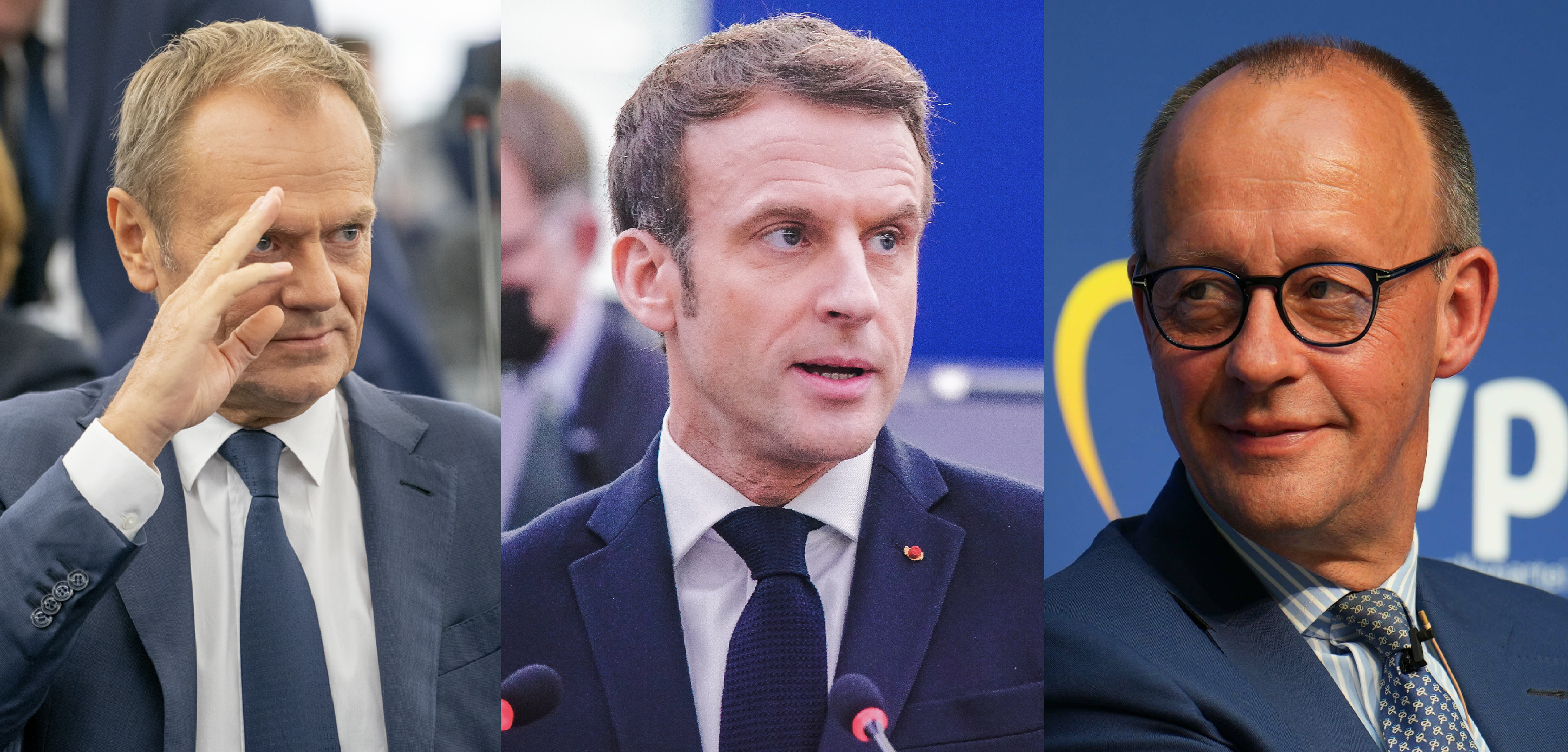
The decisive trio

It was the clearest of confessions. When Vladimir Putin said last Thursday, 23 November: Donald Trump is “an intelligent man who already has a lot of experience. I think he will find a solution”, this sycophancy was obviously a cry for help.

Almost three years after trying to get his hands on Ukraine, the Russian president still only controls a fifth of the country, including Crimea. He has also lost the Kursk region, from which he has been unable to dislodge the Ukrainian troops. He is so afraid of calling a general mobilisation that he ended up resorting to using North Korean troops, while food prices soar, air traffic is reduced due to a lack of spare parts and Russian interest rates continue to rise.

Vladimir Putin is brandishing his nuclear weapons, but his only hope – as he has just admitted – is that Donald Trump will help him get out of the trap he has got himself into.

It is therefore highly likely that these men will negotiate a compromise that the Ukrainians will simply have to endorse. Volodymyr Zelenski is so aware of this that he has just declared that the only way the Ukrainians would be able to give up the re-conquest of their lost territories is if NATO opened its doors to them. Donald Trump will refuse because he does not want to commit to protecting them. Vladimir Putin will not accept it either because it would be an admission of defeat, but both could envisage the European Union guaranteeing Ukraine’s security by deploying troops along the future demarcation line.

In the coming year or months, perhaps even before the American president takes office, the EU will have to make an existential choice.

Either it will want to take up this political, logistical and financial challenge, or it will declare itself materially and even politically incapable of doing so. Either it will assert itself as a player on the international stage, guaranteeing its own security, the protection of the amputated Ukraine and the stability of the continent, or it will shirk the responsibilities that will fall to it the moment the United States turns its back on Europe.

For the European Union, the moment of truth is approaching and the debate will be lively in the 27 capitals as well as in London. Why risk sending our forces to confront Russia? – some will ask. Why spend so much on this troop deployment when we are all strapped for cash? – many others will say. How can we agree to take such a step towards political union without even debating it,’ the outraged Eurosceptics, Europhobes and Eurominimalists will protest.

Russia will intervene massively in this debate, while Donald Trump will do his utmost to weaken one side in order to win over the other. This moment of truth will be so difficult that the outcome is unpredictable, but three men should carry decisive weight.

The first is Donald Tusk, the Polish prime minister, whose country is investing heavily in its military capabilities and who has himself been at the forefront of calls for the Union to stand up to Vladimir Putin by developing a common defence.

The second is Friedrich Merz, the Christian Democrat who is expected to become chancellor after the German elections on 23 February. In favour of borrowing, developing a European defence system and taking a firmer stance against Vladimir Putin, Friedrich Merz is likely to lead a coalition that is keen to assert the Union’s political position.

As for the third man, Emmanuel Macron, he has taken a very hard line against Vladimir Putin and can only re-establish himself on the French stage if he puts himself at the forefront of the international scene. The French president could prepare a new “Sorbonne speech” after the German elections, setting out the Union’s geopolitical priorities. He could already consult Donald Tusk and Friedrich Merz to ensure that their views coincide, paving the way for a Franco-German-Polish call for Europe to secure the demarcation line between the two Ukraines. The UK and the majority of member states would respond positively. Gradually, almost the whole Union would follow suit. In this way, Donald Trump and Vladimir Putin would have taken the common defence of a political union out of limbo.

(Photos: Wikimedia Commons, © European Parliament 2019, 2022)
The world’s most childish political left

By refusing to accept that Emmanuel Macron has chosen a prime minister from the political right rather than someone from among them, the French political left is about to make a grave mistake. It is set to impose a ban on Michel Barnier from day one, but not only will this ban not bring him down – because the left does not have a majority –, not only will this defiance not work to the left’s advantage, but it will complete the process of turning the far right into a full-fledged player on the political scene.

Much more skillfully than the left, the “Lepenists” of the National Rally have preferred to “judge by evidence”. They will wait, they say, to see if the policies of the future Barnier government meet their “demands”. They will, they say, “keep an eye on it” and in this way they will become indispensable.

At any moment they choose, they can announce that they want to ban this government, and then the left will find itself in an impossible situation. Either it would have to disgrace itself by voting with the extreme right against a right-wing but perfectly democratic prime minister, or it would have to save Michel Barnier’s neck by going against the no-confidence vote it will have wasted on him.

In both cases, consistency will be on the side of the National Rally and not on the side of the left. In either case, the far right will be able to pose at the 2027 presidential elections as a moderate force that, unlike the left, has played for stability but can no longer support a right wing that it will say is incapable of fighting immigration and the high cost of living.

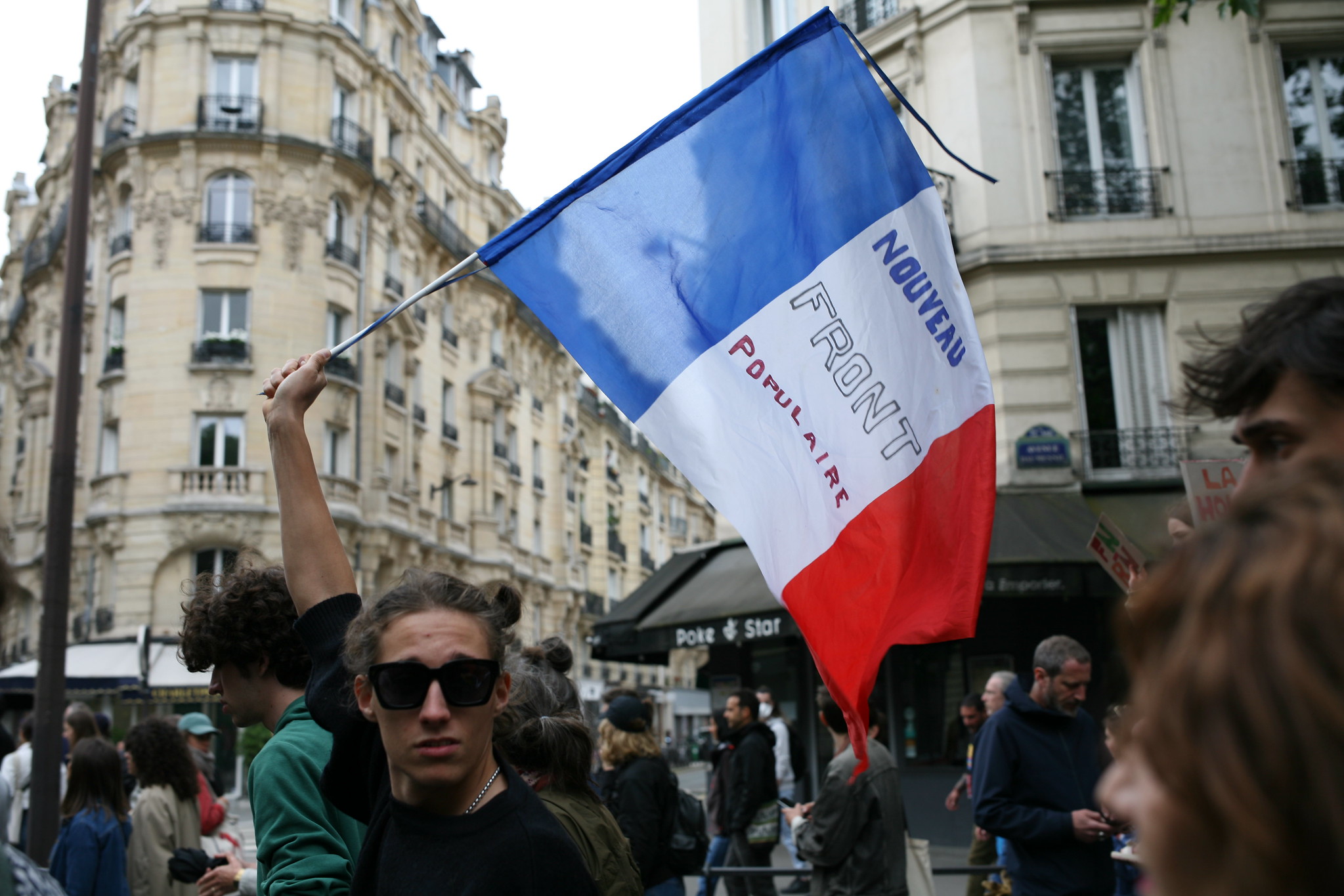
With this sulky child posture, the left is thinking with its feet. They must not make this mistake. The left must not vote for this nonsensical ban. The left must see reason, but at the moment it is all in a rage because, as it chanted in the streets on Saturday, it was the left that should have formed the government, the left that came out on top in the snap legislative elections this summer, and not Michel Barnier, a member of a party, “Les Républicains”, that the voters relegated to the very last place in those elections.

This is true. There is a “democratic anomaly”, as the more moderate say, but the left is wrong, totally wrong to complain because it is in fact them who are to blame for this situation and no one else.

While the voters had divided the National Assembly into three main blocs – the united left of the New Popular Front, the centrist parties on which Emmanuel Macron relies, and finally the “Lepenists” of the National Rally – the left behaved as if it had a parliamentary majority of its own.

Strangely, the left confused a relative majority with an absolute majority, and that is not all. It also allowed its most radical component, La France Insoumise, the “France Unbowed” to declare that it intended to put forward “its entire programme”, even though this common programme, hastily adopted in order to present a united front against the extreme right, was considered completely unrealistic by the centre and the right, which did not want it.

Instead of seeking the allies that would have enabled it to take the reins of the majority coalition, the French left cut itself off from all the democratic forces with which it could have formed a united government. Instead of defining the priority measures which it would have had the merit to push forward, it wasted weeks trying to find a common candidate for prime minister, a complete unknown, closer to the “Insoumis” than to social democracy, who it was clear would not win a majority in the National Assembly.

It would therefore have been surprising if the President of the Republic had not rejected her, whether out of disagreement with her programme or because Michel Barnier was more likely to win a majority than she was. It may well have been for both reasons, but the fact is that it is the head of state and not the political parties, even if they are in the lead, that the Constitution entrusts with the task of appointing the head of government.

So, Emmanuel Macron did not commit a “coup d’état”. Nor is it true that he never wanted a left-wing prime minister. I will be able to testify to this when the time comes, but the situation that has arisen is obviously not good. It is even worrying, and instead of making useless accusations, the left would do better to reach an agreement with Michel Barnier on common objectives, so that it is they and not the Lepenists who put the Prime Minister “under surveillance”. They could still do it. It could still turn the situation around, but only if it stops aspiring to the title of the world’s most childish political left.

(Photo credit: Jeanne Menjoulet, flickr.com/photos/jmenj/)